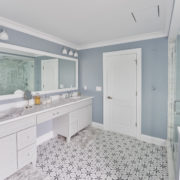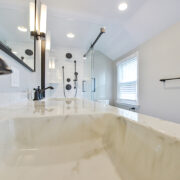
Custom Showers: Your Master Bathroom’s Main Attraction
Custom showers are the ultimate master bathroom upgrade. Learn about design options, must-have features, and why they’re worth the investment.
If you were to poll folks on what they most look forward to when starting or ending their day, a hot shower would probably be near the top of the list. A custom shower design will have you looking forward to it even more, as you curate every aspect of the experience from your head to your feet.
There are many ways to go about designing a custom shower enclosure for a master bathroom, and few of them are objectively “wrong.” The “right” design all depends on the space you’re working with and personal preference. Let’s explore the options!
Explore Bathroom Remodeling with Ayars
Common Master Bathroom Floor Plans with Walk-in Showers
One of the very few constraints you’ll have when customizing a walk-in shower (other than budget) is the master bathroom layout itself. Its dimensions and setup will force some decisions about the custom shower’s size, shape, and location. Below are some general patterns for master bathroom floor plans with walk-in showers.
L-Shaped Layout
- Walk-in shower in one corner
- Vanity along one wall, toilet along another
- Efficient use of space in medium-sized bathrooms
- Often includes a separate soaking tub
Linear/Galley Layout
- All fixtures are arranged along one or two parallel walls
- Shower typically at one end
- Works well in narrower spaces
- Good for bathrooms with limited width
Compartmentalized Layout
- Shower in its own separate area/room
- The toilet often gets its own compartment too
- Vanity area remains open
- Provides maximum privacy and functionality
U-Shaped Layout
- Fixtures are arranged around three walls
- The shower is usually anchored in a corner
- Central floor space remains open
- Good for larger bathrooms
Split Vanity Layout
- Dual vanities on opposite walls or separated
- Walk-in shower positioned between or to one side
- Popular in luxury master suites
- Allows two people to use the space simultaneously
Custom Shower Structure
Size
Generally speaking, most people prefer a shower that is cozy but not claustrophobic. You should be able to fully extend your arms and spin around in a circle without bumping into anything. The standard size for a walk-in shower is 48” x 36,” but larger or more upscale master bathroom remodeling projects might want to consider an enclosure that is 60” x 36” or larger.
Shape
A square or rectangular shower enclosure will work for most master bathrooms in a corner or along a wall, whereas a circular shape is typically only possible in the middle of a larger space. Of course, some homeowners opt to forgo an enclosure entirely, in an effort to capture the vibe of a steam room or spa.
Door
Once you’ve determined the shower size, location, and orientation in the room, it will be a lot easier to choose a door.
- Sliding doors are good for smaller bathrooms and shower enclosures flush with walls
- Hinged doors swing outward so you’ll have to account for how an open shower door may interfere with (or be interfered with) other master bath elements, such as the sink, vanity, or the entrance to the bathroom itself.
- Pivot doors are a more modernized cousin to the hinged door, operating by the same out-swinging mechanic. However, since it is either hinged at the very top and bottom or hinged continuously, the door is tighter to the frame and does not swing out as far.
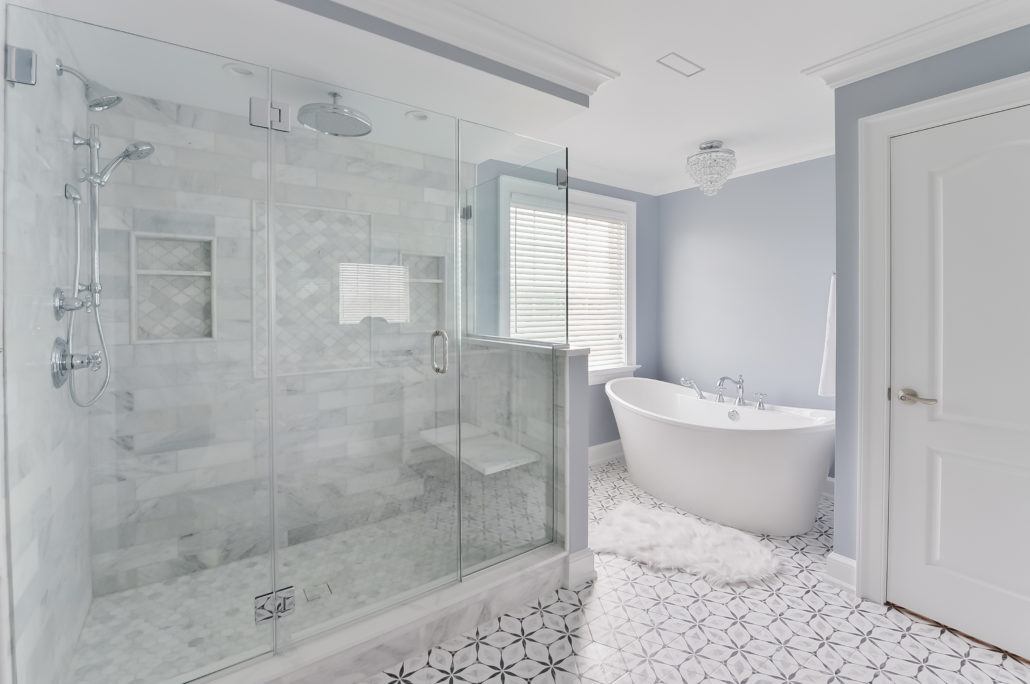
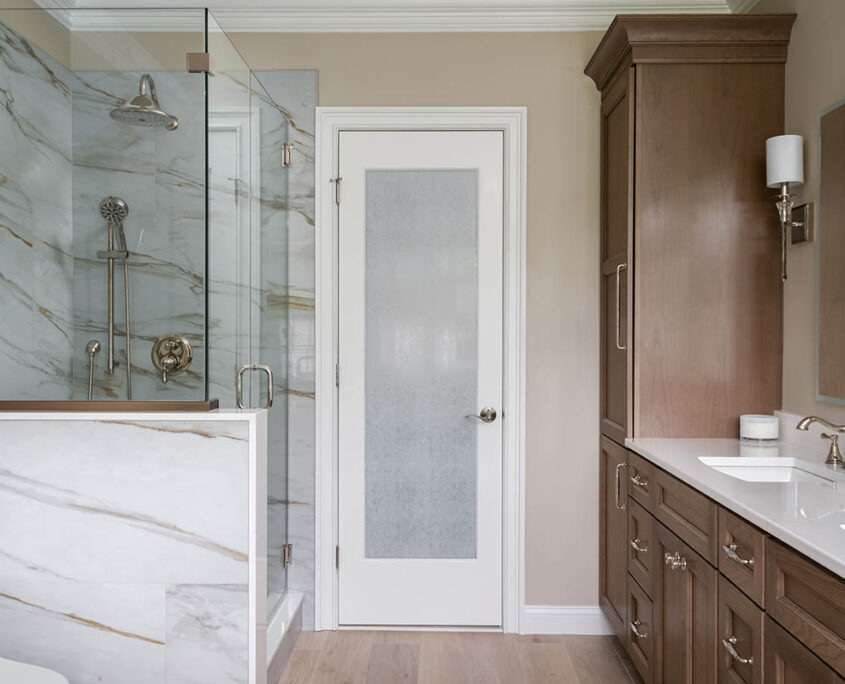
From there, you might consider whether you want clear or obscure glass, a partial wall, or windows depending on your aesthetic preferences and privacy needs.
Custom shower tiling
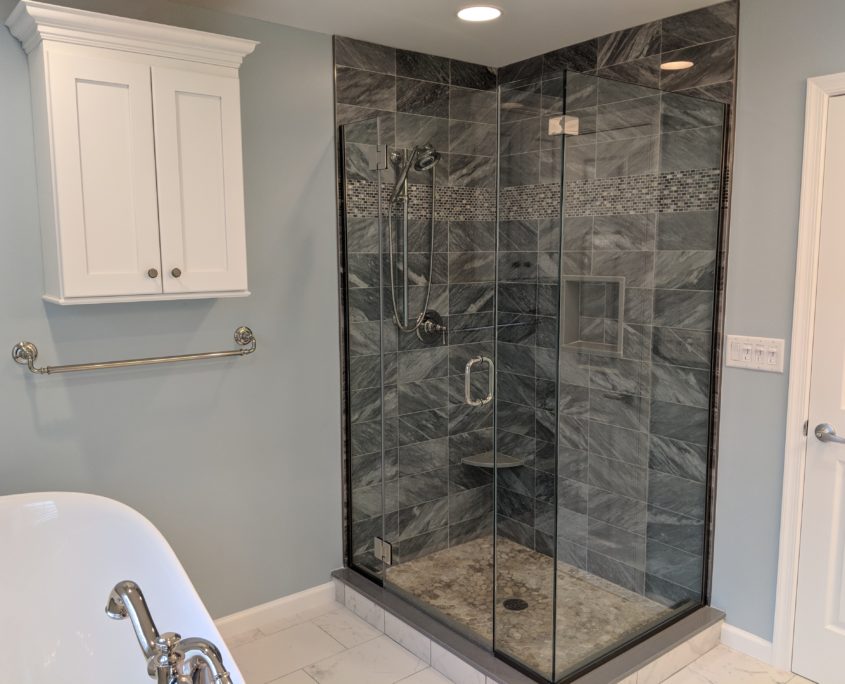
The selection of shower tile materials available today are virtually limitless, and can pretty convincingly mimic many aesthetics and textures found in nature.
- Ceramic and porcelain tiles, which are both formed from clay, remain the most popular option — they’re typically more economical and easier to clean and maintain (porcelain even more so).
- Natural stone materials such as marble, slate, and travertine are among the most striking and beautiful ways to finish shower walls and floors. However, they’re more high-maintenance and may fade, discolor, or degrade more quickly without proper sealing and regular cleanings.
- Man-made materials such as engineered quartz, cultured marble, or solid surface (e.g. Corian) combine ground stone with other binding and fortifying substances. They’re available in a wealth of colors and patterns, replicating materials that would otherwise not be recommended for a shower environment (such as natural wood).
Custom shower systems
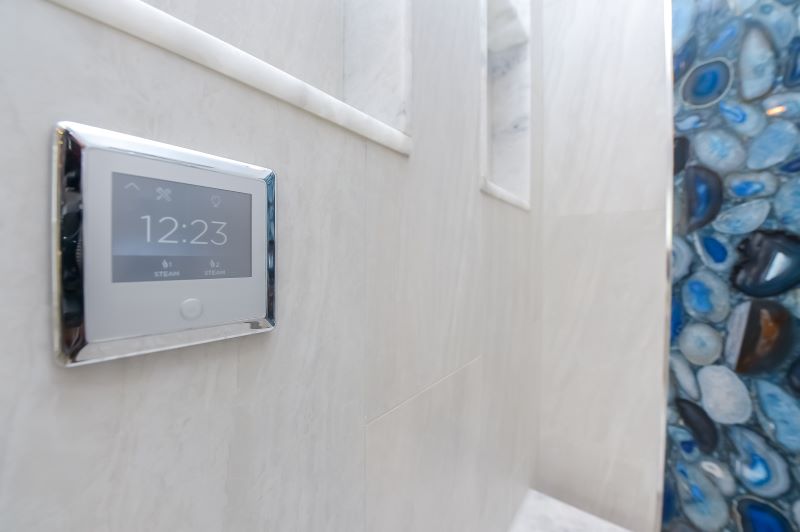
When we talk about shower systems, we are talking about how water temperature is controlled and regulated. There are three main types.
- Manual mixer: Features one or two valves that adjust the ratio of hot to cold water flowing through the system
- Thermostatic: Allows precise temperature control through a thermostat, and is sometimes digital.
- Electric: A heating unit directly heats cold water from your water supply continuously. This occurs separately from your hot water system.
Showerheads
Water pressure and spray patterns are governed by showerheads, which greatly influence the sensory experience of your custom shower. They are classified in one of two ways.
By mount position
- Fixed showerheads are mounted to a shower wall.
- Hand-set showerheads are also mounted to a wall but attached to a hose. This not only allows you to hand-maneuver the spray to virtually any angle you desire, but also makes for easier cleaning.
- Ceiling-mounted showerheads rain down water from above at low or medium pressure.
By control settings
- Single-setting: Offers only one spray setting and flows at a constant pressure.
- Multi-setting: Variable spray patterns and pressures, from beads to mists.
- Rainfall: The most coveted type of single-setting showerhead. The experience is like showering under a gently cascading waterfall.
- Shower tower: If you’ve ever wanted to use a jacuzzi standing up, this is for you. You’ll be able to adjust several vertically oriented jets and nozzles to caress you from all angles for the ultimate spa experience.
Custom shower features
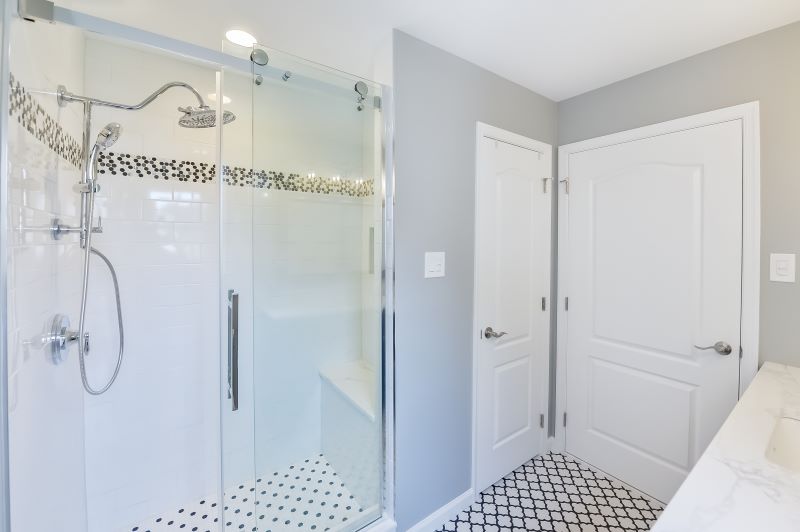
Now that the essentials are taken care of, we can turn our attention to finer details. Liven up or tone the mood with LED lighting and Bluetooth speakers. Accommodate all your sundries with built-in shelves or cubbies. Incorporate a shower bench to make personal grooming tasks that much easier.
If all these possibilities excite you, you’re not alone! The professionals at Ayars Complete Home Improvements take a true craftsman approach to master bath remodels — a beautiful custom shower is just the beginning!
Custom Showers
A custom shower design allows you to curate every aspect of your showering experience. This personal customization can make you look forward to starting or ending your day even more. The “right” design is ultimately dependent on the specific space you are working with and your personal preferences.
The main constraints when customizing a walk-in shower, apart from your budget, are the master bathroom’s existing layout, dimensions, and setup. These factors will guide decisions regarding the custom shower’s size, shape, and location.
Most people prefer a shower that feels cozy but not claustrophobic, allowing you to fully extend your arms and spin around without bumping into anything. A standard walk-in shower size is 48” x 36”. However, for larger or more upscale master bathroom remodeling projects, you might consider an enclosure that is 60” x 36” or even larger.
Square or rectangular shower enclosures are suitable for most master bathrooms, typically placed in a corner or along a wall. A circular shape is generally only feasible in the middle of a larger space. Some homeowners also choose to forgo an enclosure entirely to achieve a steam room or spa-like ambiance.
Once the shower size, location, and orientation are determined, you can choose a door type:
- Sliding doors are a good option for smaller bathrooms and shower enclosures that are flush with walls.
- Hinged doors swing outward, requiring you to account for potential interference with other master bath elements like the sink, vanity, or the bathroom entrance.
- Pivot doors are a modern variation of hinged doors, also swinging outward. They are hinged at the very top and bottom or continuously hinged, allowing the door to be tighter to the frame and not swing out as far.
Beyond the door, you can also decide on clear or obscure glass, whether to include a partial wall, or incorporate windows, based on your aesthetic preferences and privacy requirements.
To enhance your custom shower further, you can add LED lighting to set the mood, Bluetooth speakers for entertainment, built-in shelves or cubbies for toiletries, and a shower bench to make personal grooming tasks easier.
The selection of shower tile materials is vast and can effectively mimic various natural aesthetics and textures. Options include:
- Ceramic and porcelain tiles: These are clay-formed, very popular, generally more economical, and easier to clean and maintain (with porcelain being even more so).
- Natural stone materials: Such as marble, slate, and travertine, which offer striking beauty but are more high-maintenance and may fade, discolor, or degrade without proper sealing and regular cleanings.
- Man-made materials: Like engineered quartz, cultured marble, or solid surface (e.g., Corian), which combine ground stone with other binding substances. These are available in many colors and patterns, and can even replicate materials like natural wood, which wouldn’t typically be recommended for a shower environment.
Shower systems manage water temperature and regulation, with three primary types:
- Manual mixer: This system uses one or two valves to adjust the ratio of hot to cold water flow.
- Thermostatic: This allows for precise temperature control using a thermostat, and can sometimes be digital.
- Electric: This system features a heating unit that directly and continuously heats cold water from your supply, operating separately from your main hot water system.
Showerheads, which control water pressure and spray patterns, are classified in two ways:
- By mount position:
- Fixed showerheads are mounted directly to a shower wall.
- Hand-set showerheads are also wall-mounted but feature a hose, allowing you to maneuver the spray to various angles and making cleaning easier.
- Ceiling-mounted showerheads deliver water from above at low or medium pressure.
- By control settings:
- Single-setting: Offers one constant spray setting and pressure.
- Multi-setting: Provides variable spray patterns and pressures, ranging from fine mists to beads.
- Rainfall: This is a highly desired single-setting showerhead type that simulates showering under a gently cascading waterfall.
- Shower tower: This system features several vertically oriented jets and nozzles that can be adjusted to provide a full-body spa experience, akin to a standing jacuzzi.